Yet while much of the market remains focused on model capabilities and computing power, companies often encounter a more fundamental challenge once implementation begins:
The model may be ready—but the data is not.
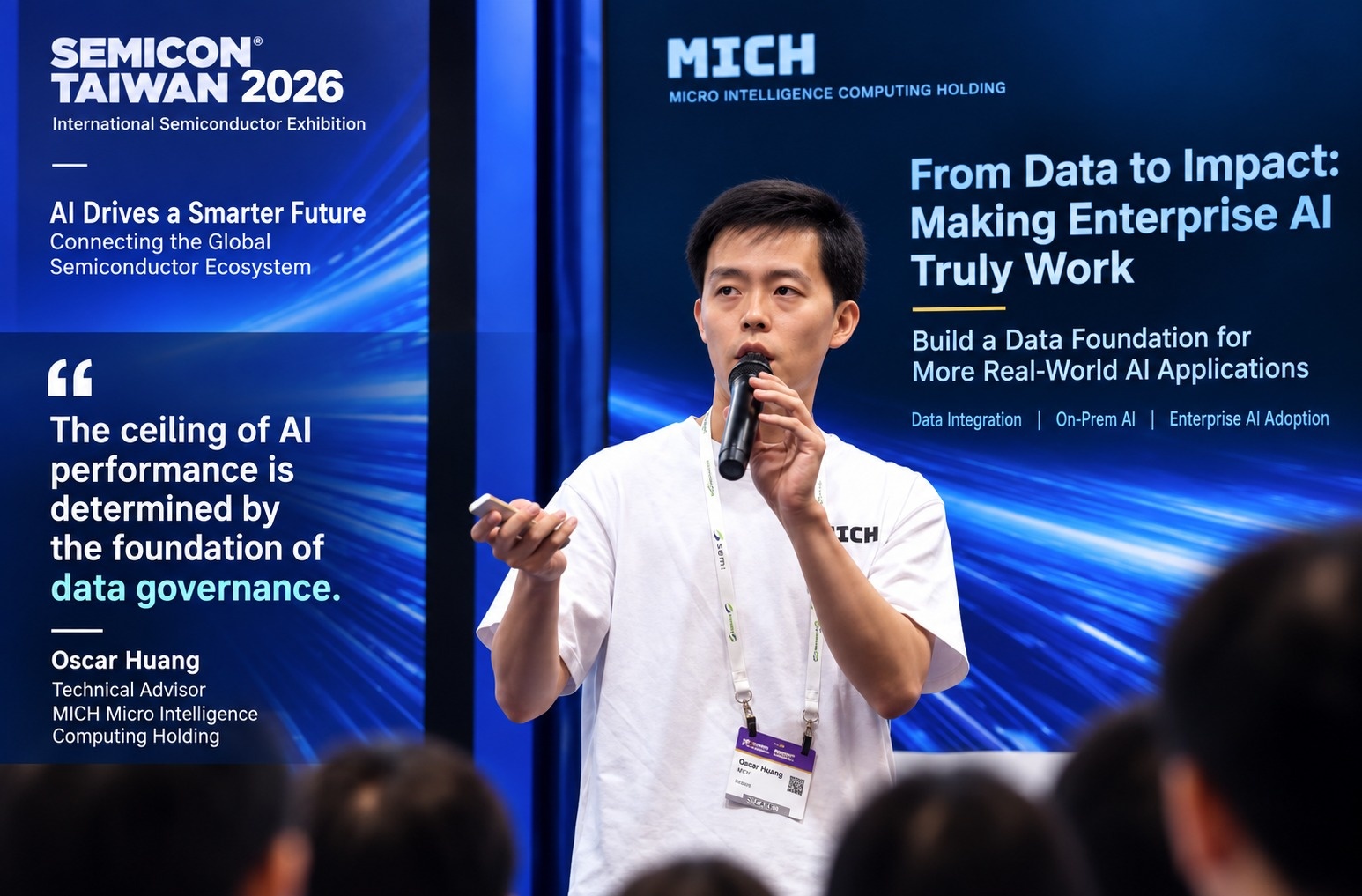
MICH Technical Advisor Oscar Huang points out that in enterprise AI projects, model development is often not the most time-consuming part. The real effort frequently lies in the data engineering required before AI can operate reliably—from retrieving data and aligning schemas to integrating information across multiple systems and validating its accuracy.
This leads to a critical consideration for enterprises:
The ceiling of AI performance may ultimately be determined by the foundation of data governance.
Four Data Engineering Challenges Before AI Can Go Live
Enterprise data is typically distributed across ERP, MES, equipment systems, and other existing platforms. Before AI can effectively use this information, organizations must first address four fundamental areas: system assessment, system integration, heterogeneous data consolidation, and data validation.
Based on Oscar Huang’s experience advising enterprise AI implementations, this preparation phase can take three to six months.
The larger challenge often appears after the first AI application is deployed.
If every AI project builds its own data pipelines and integration methods, the same engineering work must be repeated when the second or third agent is introduced. While this approach may accelerate an individual project in the short term, it can eventually create a new generation of data silos.
Enterprises therefore need more than a single AI project that works. They need a reusable data foundation capable of supporting every AI application that follows.
The Goal Is Not to Skip Data Governance, but to Eliminate Repetitive Work
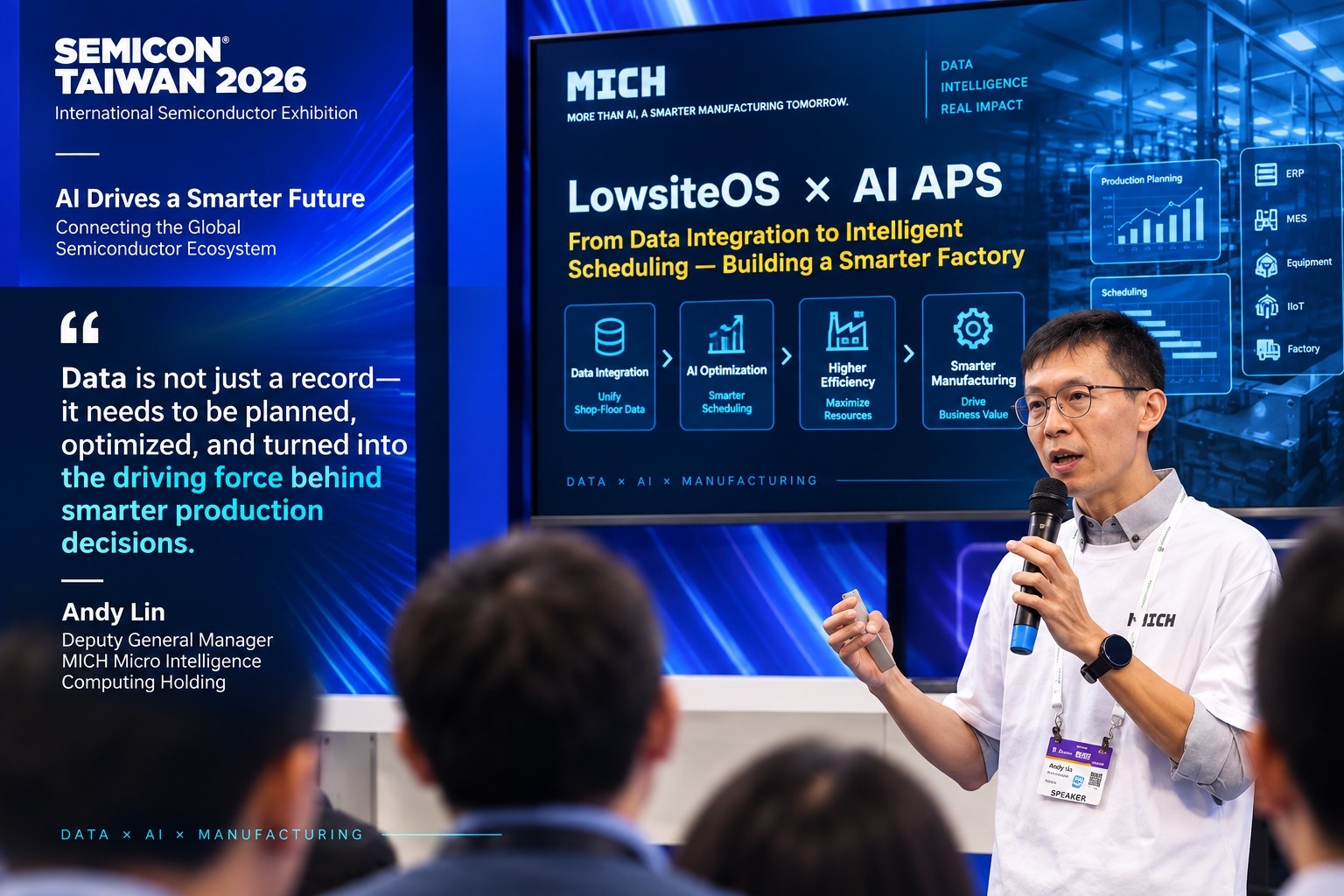
To reduce the significant integration effort required in the early stages of enterprise AI deployment, MICH uses the LowsiteOS Data Agent to accelerate system connectivity and heterogeneous data integration, reducing parts of the process to as little as one hour.
Speed, however, does not mean handing every responsibility over to AI.
Enterprises still need to understand and assess their own data environments, while final data validation remains essential. Once AI begins participating in production and operational decisions, inaccurate data does more than produce incorrect answers—it can directly undermine trust in the entire AI system.
The objective of faster integration is therefore not to bypass governance. It is to allow organizations to spend less time repeatedly building connections and more time on the areas that genuinely require human expertise: data quality, validation, and business context.
The First AI Application Is Expensive. What Happens With the Second Is What Matters.
Once an enterprise has established its system inventory, data catalog, and validation rules, those assets should not disappear when the first AI project ends.
Instead, they should become part of a shared foundation for future AI applications.
When the second, third, and subsequent agents are deployed, organizations can reuse existing data structures and governance rules rather than rebuilding the same data engineering processes from scratch.
This changes how enterprises should evaluate AI investment.
The question is not simply how quickly the first AI project can be delivered, but how much reusable infrastructure it leaves behind for the next one.
That distinction becomes increasingly important as companies move from isolated AI proofs of concept to enterprise-wide AI deployment.
Manufacturing Faces Another Challenge: Its Most Valuable Data Cannot Leave the Factory
For semiconductor and manufacturing companies, data integration is only part of the challenge.
Process parameters, yield data, customer part numbers, equipment logs, and other operational information are often among a manufacturer’s most sensitive and strategically valuable assets. Such data cannot simply be transferred outside the enterprise environment, making where AI is deployed an architectural decision rather than merely an IT preference.
For this reason, MICH deploys LowsiteOS together with on-premises AI servers, allowing AI workloads to access internal factory data without requiring core operational information to be sent to external environments.
The principle is straightforward:
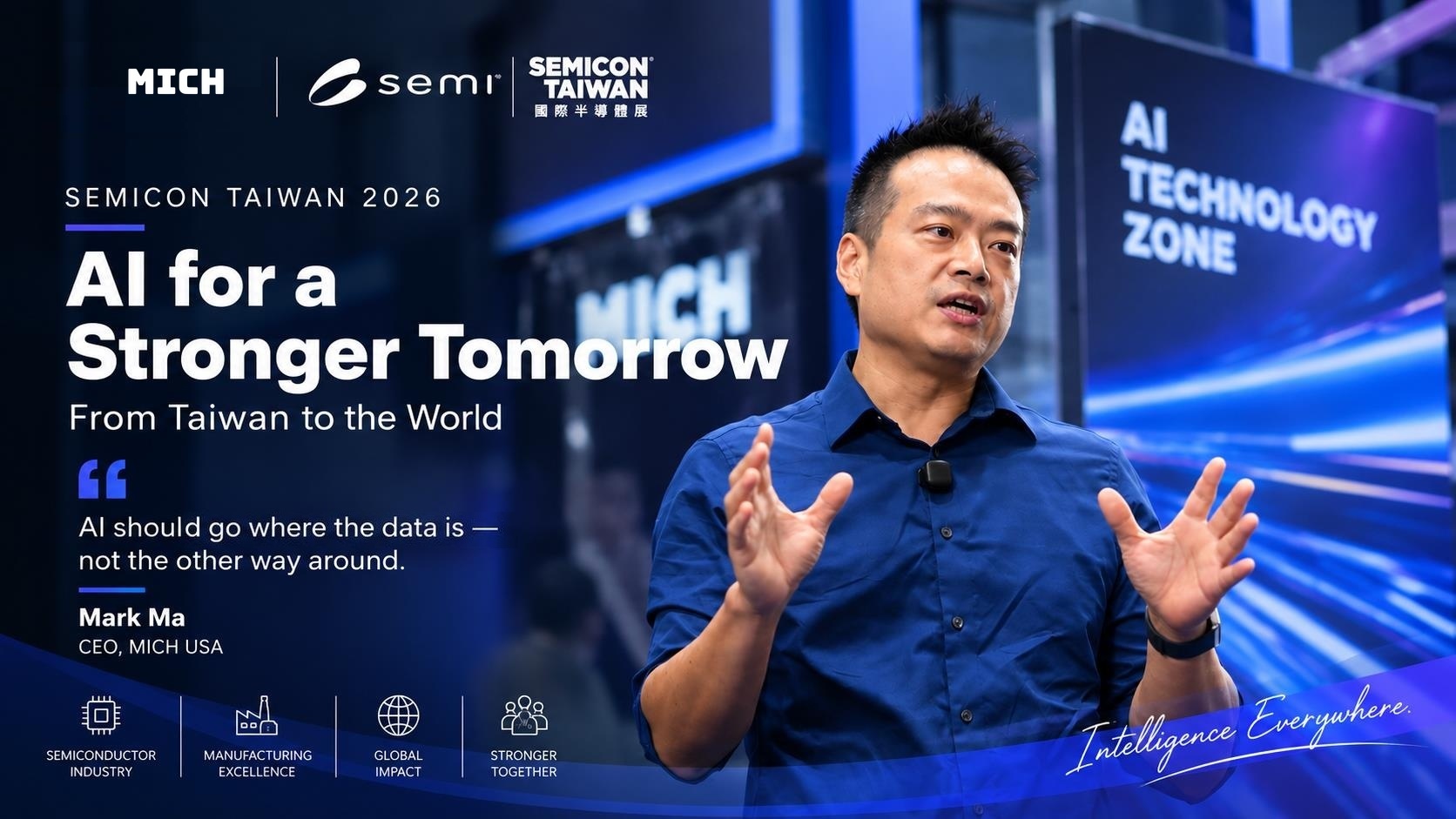
Instead of moving your most valuable enterprise data to AI, bring AI to the data.
As enterprises move from a single AI PoC toward multiple AI agents, the ability to scale may depend less on which model they choose and more on whether their underlying data can be securely, accurately, and repeatedly reused across applications.
That is one of the critical thresholds enterprises must cross as AI moves beyond impressive demos and becomes part of core business and manufacturing operations.