These challenges become even more critical as AI enters industries such as manufacturing and semiconductors, where data security is a top priority. Can sensitive information—including process parameters, yield data, defect images, and customer drawings—leave the factory? Can AI-generated decisions be traced back to their sources? And when an anomaly occurs, can the enterprise determine exactly which data, models, and access permissions were involved?
Issues once considered primarily the responsibility of IT or cybersecurity teams are now becoming fundamental requirements for enterprise AI adoption.
As a result, the competitive landscape of enterprise AI is shifting from “How powerful is the model?” to “Can AI be safely integrated into enterprise operations?”
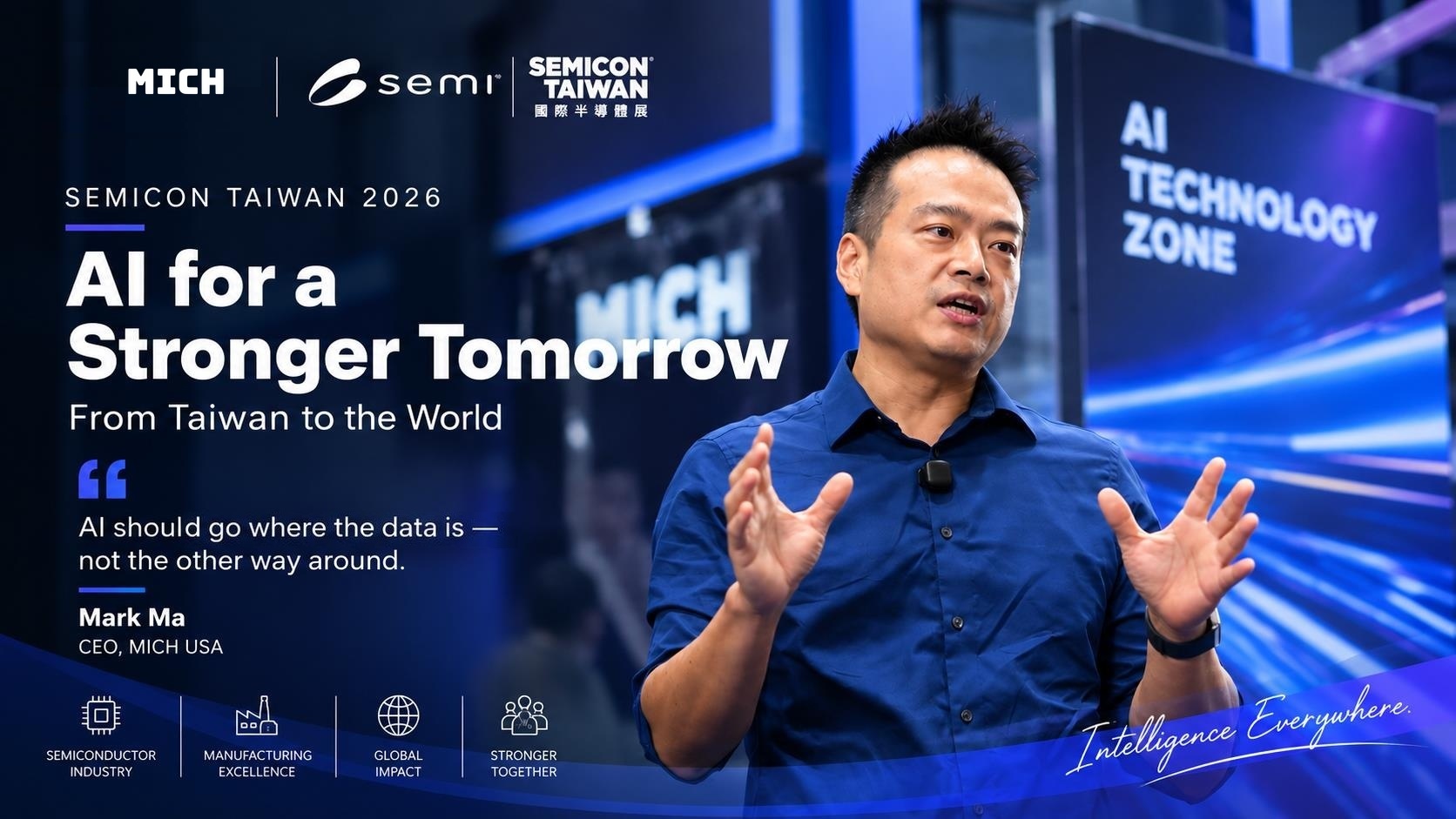
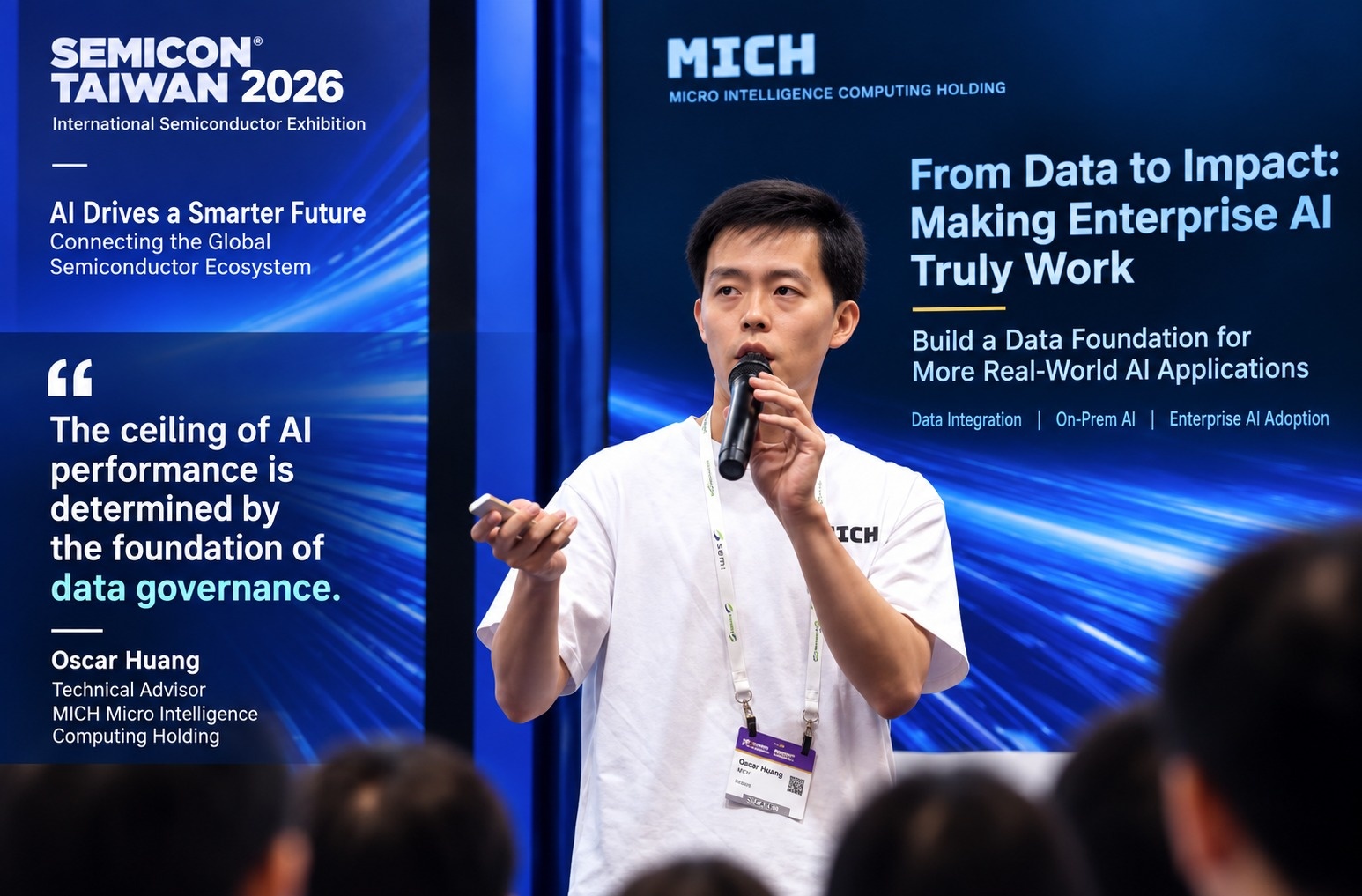
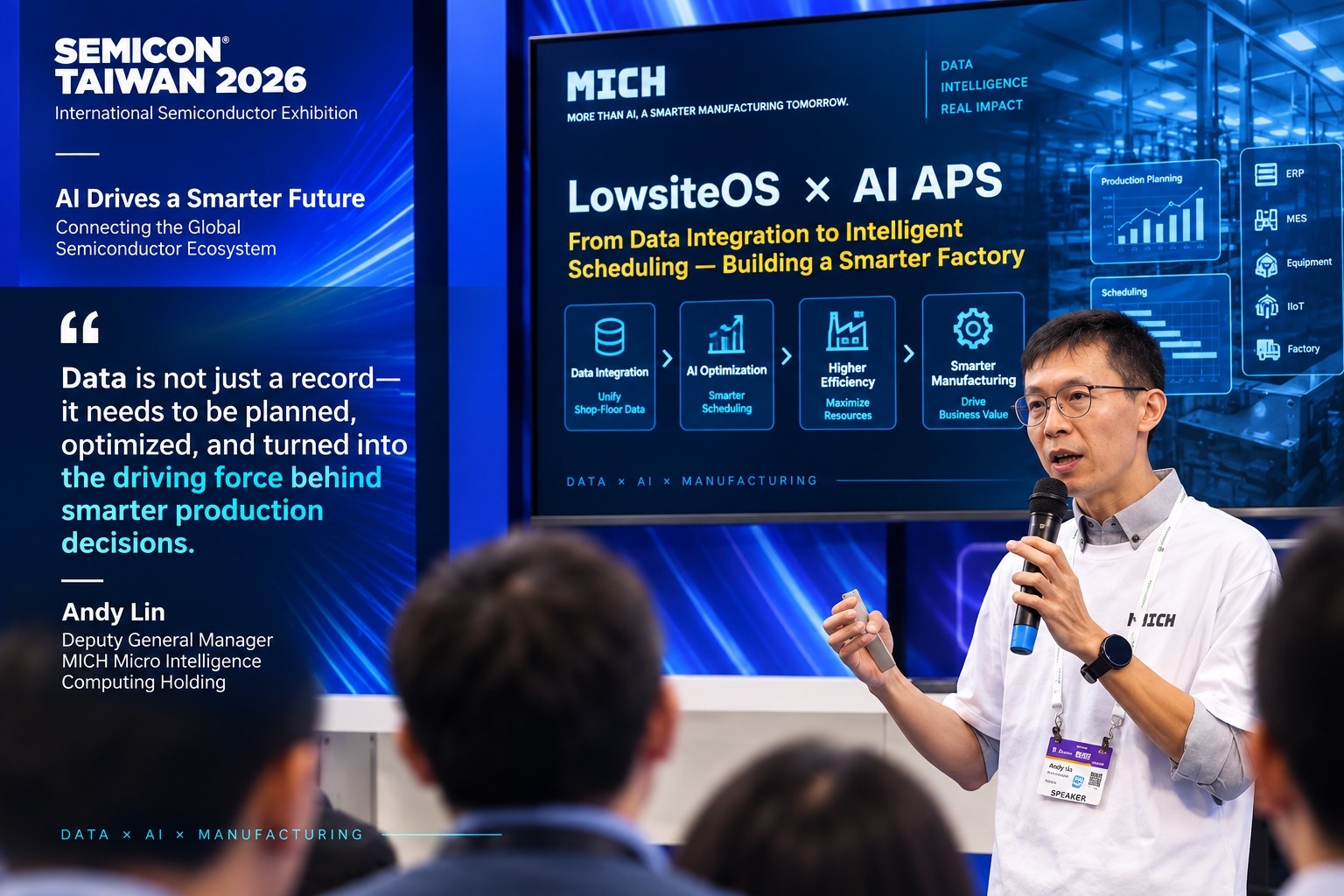
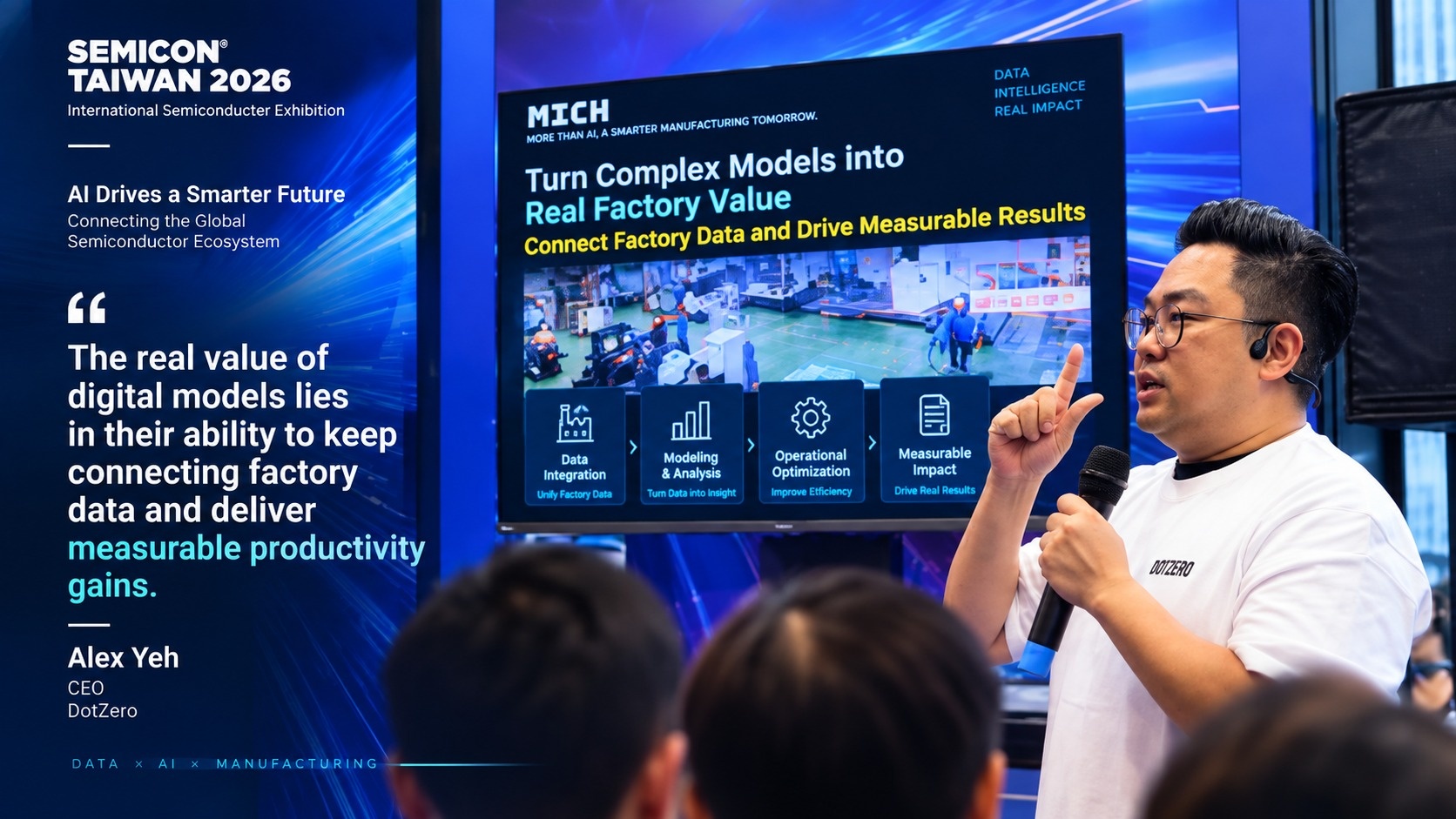
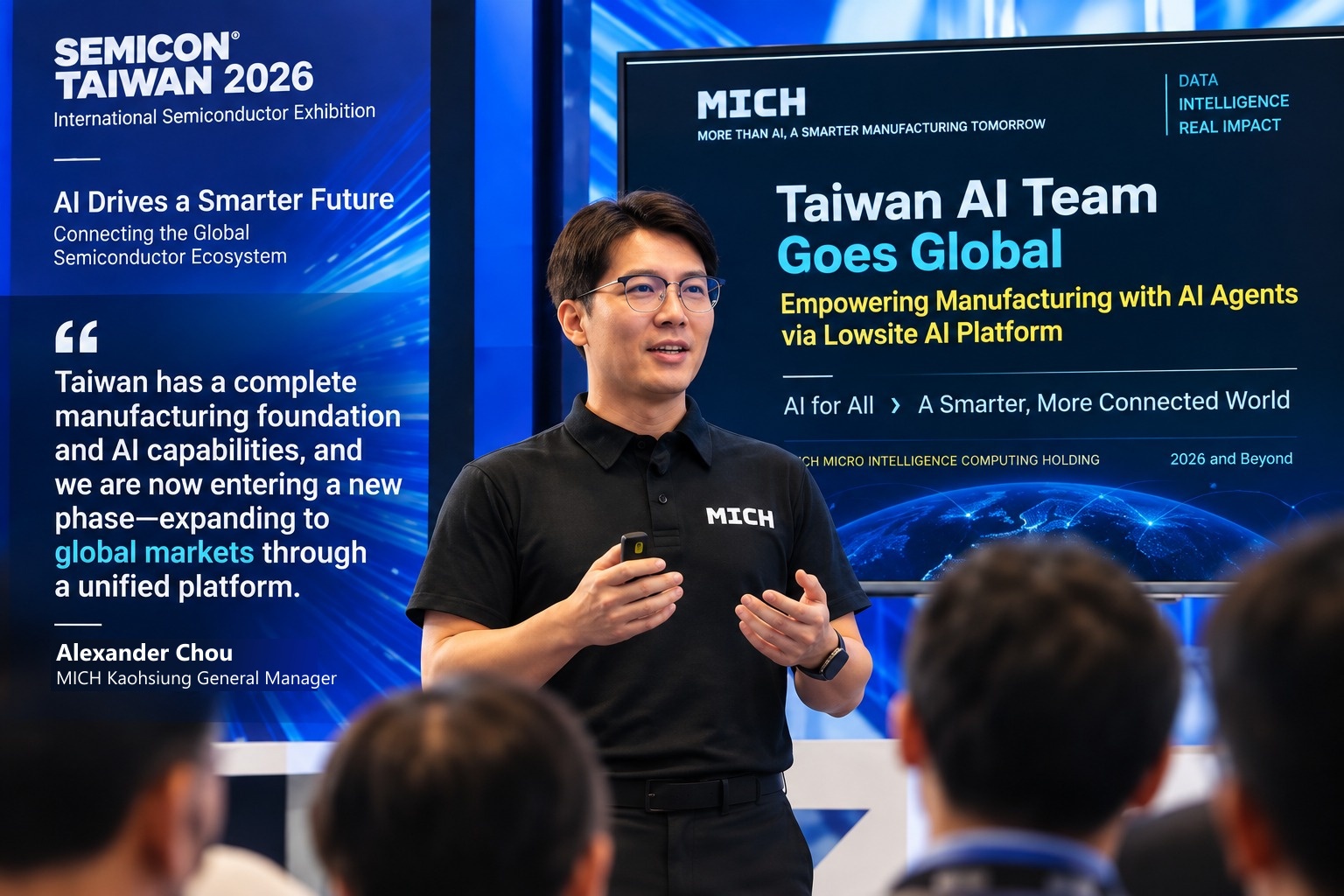
During SEMICON Taiwan 2026, MICH presented its vision under the theme “Taiwan’s AI Fleet Goes Global: Powered by Lowsite AI to Build a New Enterprise Agent Ecosystem in North America.”
MICH highlighted three major challenges that Taiwanese AI companies must address when entering the North American enterprise market: data sovereignty, AI auditability, and the duplicated governance costs created by multiple applications and vendors.
If AI Works, Why Are Enterprises Still Hesitant to Use It?
For many enterprises, building the first AI demo is not the hardest part.
The real challenge begins after the demo.
The first Agent may need access to ERP data. A second application may need to integrate with MES. A third use case may involve equipment data and customer information.
With every new requirement, enterprises may have to repeat the same process of data integration, permission configuration, cybersecurity review, and governance validation.
When different vendors establish their own rules and architectures, the result is not a scalable AI foundation, but a growing collection of isolated projects.
This leads to one of the central questions raised by MICH:
Enterprises may not simply need more AI applications. They need a common foundation that allows new AI applications to be continuously built, deployed, and scaled.
MICH therefore positions LowsiteOS as a foundational platform for on-premises enterprise AI.
It enables enterprise data, AI models, and operational logs to remain within the organization's controlled environment, while allowing multiple AI Agents to operate under a shared governance framework.
When a new Agent or application is introduced, enterprises do not need to rebuild their governance structure from scratch. Instead, the new application can build upon the existing data and governance foundation.
From Exporting Individual Products to Building a Global “AI Fleet”
Technology, however, is only half of the equation.
For smaller Taiwanese AI startups and solution providers, even a highly competitive AI Agent may face significant barriers when entering the North American enterprise market—including establishing local sales capabilities, passing supply-chain reviews, meeting cybersecurity requirements, and navigating compliance processes.
In other words:
Building a competitive product does not automatically mean gaining access to the market.
This is the challenge behind MICH’s concept of an “AI Fleet”—a model designed to distribute the cost and complexity of international market expansion rather than requiring each company to take on the entire burden independently.
Under this model, LowsiteOS serves as a shared enterprise AI foundation, while different AI Agents, manufacturing solutions, and industry partners can operate on top of the same architecture.
Combined with local resources and market capabilities in North America, this approach could reduce the burden on individual companies to independently establish their own overseas market-entry infrastructure.
MICH’s vision, therefore, goes beyond simply selling an AI software product overseas.
It proposes a broader model for bringing Taiwan’s AI ecosystem to international markets:
If individual startups cannot efficiently absorb the cost and complexity of entering global enterprise markets on their own, can a shared platform, governance framework, and market ecosystem enable multiple Taiwanese AI solutions to expand internationally together?
As enterprise AI moves from “Can we build it?” to “Can we scale it?”, the model itself may no longer be the biggest barrier.
The companies and ecosystems capable of connecting data, computing infrastructure, AI Agents, governance, and market access into a repeatable architecture will be better positioned to transform AI from one-off projects into a foundational capability embedded in core enterprise operations.