Company snapshot
A Tier-1 automotive parts supplier with three production lines feeding two major OEMs. The plant has run a conventional MES for over a decade and a quality system layered on top. Both work, but neither talks to the people responsible for keeping the line moving.
- ~1,400 SKUs across stamping, welding and assembly
- ~220 operators across three shifts
- Two OEM customers with strict zero-defect targets
The challenge
The customer's pain wasn't volume of defects; it was time to diagnosis. When a stamping line started producing parts at the edge of tolerance, the existing workflow looked like this:
- QC flags a batch on the morning audit.
- An engineer pulls historical sensor data.
- A meeting is scheduled. Several follow up.
- A root cause is filed, usually 7–14 days after the first flagged batch.
By the time the cause was documented, the line had often drifted into a different mode. Worse: the documented cause rarely made it back into the operator's daily routine. The same issue would surface again two months later, against the same root cause, against the same shift.
What we built
The deployment was scoped tightly: one stamping line first, prove the loop, then expand. No replacement of any existing system. All anchored on a single AI Server Tier 2 in the existing server room.
Phase 1 — Data ingestion
LowsiteOS connected to the existing Siemens PLCs via OPC UA and to the MES via a read-only DB connector. No outbound network access was required. Total integration effort: 9 working days.
Phase 2 — Model training
Engineers labelled six months of historical anomalies with the customer's existing fault taxonomy. Models were trained on-prem; nothing left the building. The model team and the customer's engineers worked from the same notebooks.
Phase 3 — Operator workflow
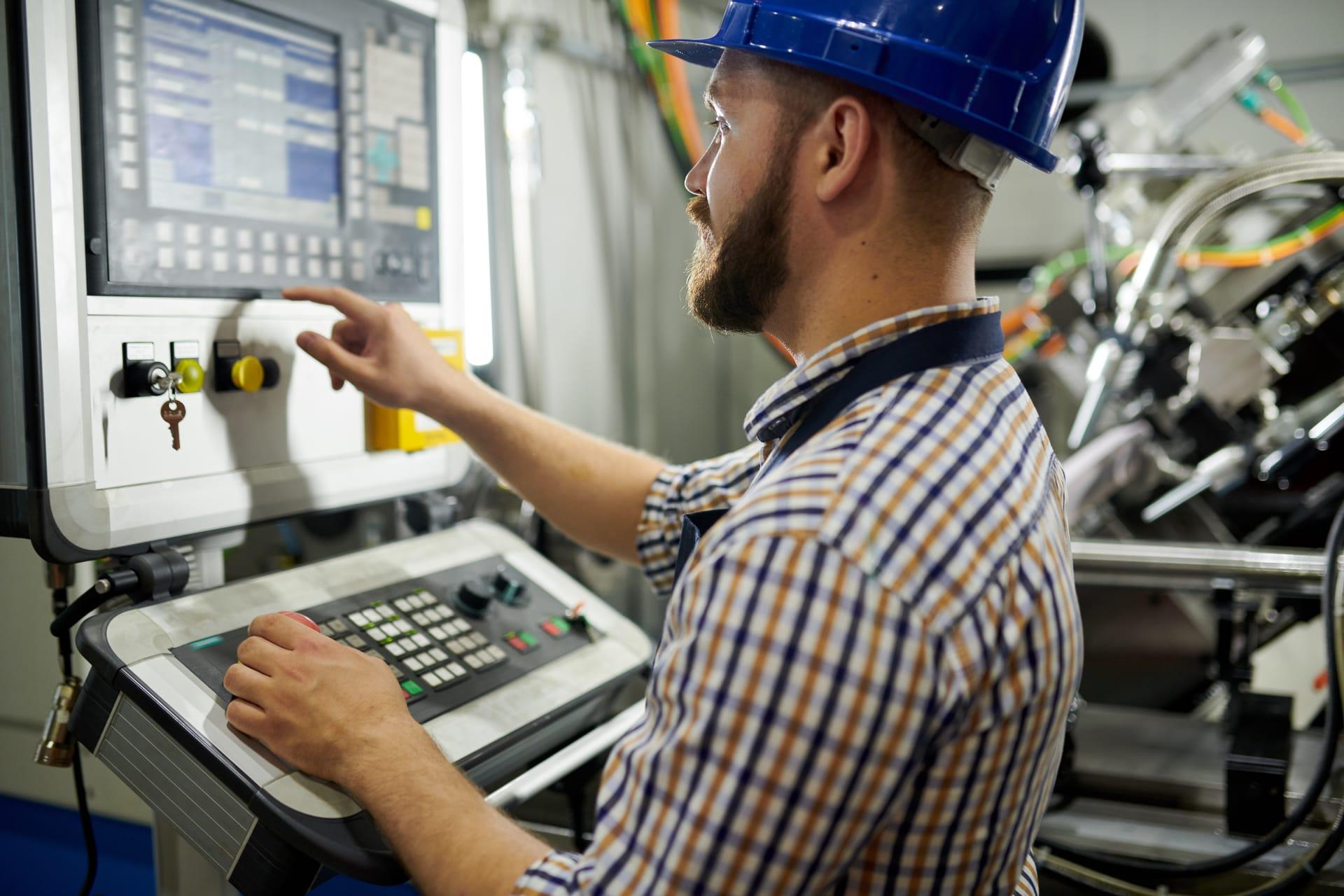
A tablet-mounted UI was added at the line. When the model flagged an anomaly, the operator saw ranked likely causes and could confirm, override or escalate in one tap. Every confirmation fed back into the model.